
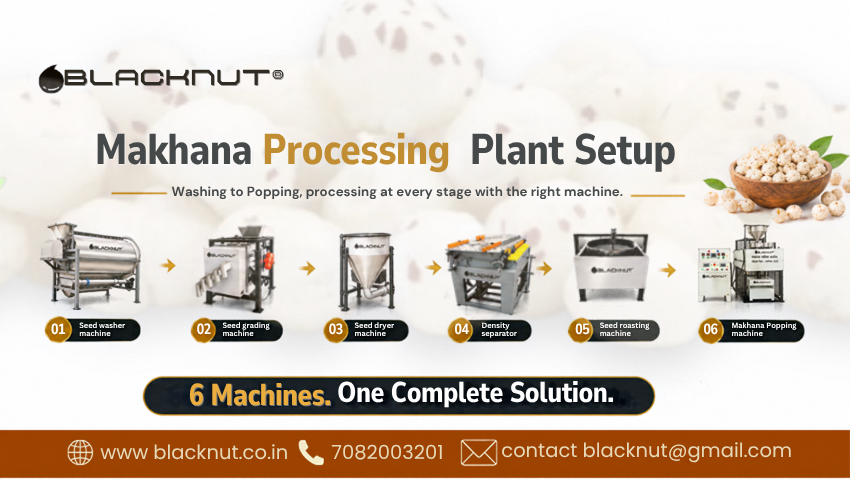
Makhana Processing Plant: 6 Machines, One Complete Solution
Not long ago, makhana was something most of us saw only during fasting days or festivals. Today it's on supermarket shelves, in gym bags, and in every "healthy snack" list you come across. People want it roasted, flavored, and neatly packed, and they want every piece to look white, light, and crisp.
Here's the catch: if you're still processing makhana by hand, keeping up with that demand is tough. The work is slow, tiring, and hard to keep consistent from one batch to the next.
That's where a proper makhana processing plant comes in. Instead of doing everything manually, you give each stage its own dedicated machine. Let's walk through what a complete 6-machine setup looks like and why it works.
Why Move to a Makhana Processing Plant?
If you're wondering whether the switch is worth it, these are the everyday problems machines take off your plate:
- Every batch looks and tastes the same. Customers notice when quality changes, and machines help you avoid that.
- You get more done in a day. A mechanized line handles far more seed than a team working by hand.
- Your team works less hard. Washing, sorting, and popping are physically demanding jobs.
- Your product stays cleaner. Steel-bodied, enclosed machines are easier to keep hygienic.
- You earn more per kilo. Well-graded, evenly popped makhana sells for better prices in both retail and export markets.
The 6-Machine Makhana Processing Flow
Think of the plant as a relay race. Each machine passes a slightly better product to the next one.
1. Seed Washer Machine
Raw seeds come in with mud, dust, and bits of plant matter stuck to them. The seed washer gives them a thorough clean right at the start. This matters more than it seems, because clean seed keeps the rest of your machines running well and keeps impurities out of the final product.
2. Seed Grading Machine
Makhana seeds come in all sizes, and size affects how a seed roasts and pops. The grading machine sorts them into groups of similar size. When you process one size at a time, you get more even results and a much more attractive finished product.

3. Seed Dryer Machine
After washing, the seeds are damp. The dryer takes care of that in a controlled way, so you don't have to depend on sunshine or worry about the weather. That means your production doesn't stall in the monsoon.
4. Density Separator
Some seeds are simply better than others. The density separator sorts seeds by weight and density, so the well-formed, heavy ones move ahead while the weaker ones are set aside. It's a quiet step, but it has a real effect on how many seeds pop properly.
5. Seed Roasting Machine
Roasting gets the seed ready for the big moment. Even controlled heat conditions the kernel so it reacts well when it reaches the popping stage. Uneven roasting is one of the main reasons for half-popped or unpopped seeds, which is why a dedicated roaster is worth having.
6. Makhana Popping Machine
This is where the magic happens. The prepared seed is cracked open and puffs into the light, white makhana we all know. Popping used to depend on skilled hands and a lot of patience. A dedicated popping machine with a control panel makes the process much easier to manage and repeat.
How It All Fits Together
Washer → Grading → Dryer → Density Separator → Roasting → Popping
Clean first, sort by size, dry, pick the best, then roast and pop. Because each step sets up the next, the whole line runs smoothly, with fewer hold-ups and less waste.
Is This Setup Right for You?
A complete plant makes sense if you are:
- Starting a makhana business from scratch
- A current processor who wants to grow beyond manual work
- Part of a farmer group or FPO looking to add value to your harvest
- A food brand planning your own makhana range
Blacknut: One Partner for Your Complete Makhana Processing Setup
Once you know which machines you need, the next question is where to get them. Buying each machine from a different supplier often means mismatched capacities, extra coordination, and no one to call when something goes wrong.
That's why many buyers prefer a single partner for the whole line, and that's exactly what Blacknut offers. From the first washing stage to the final popping stage, Blacknut supplies all six machines of the makhana processing plant:
- Seed washer machine
- Seed grading machine
- Seed dryer machine
- Density separator
- Seed roasting machine
- Makhana popping machine (model MPM-30E)
What You Get with a Complete Blacknut Setup
- A complete plant solution. You don't have to piece the line together yourself. Every machine is meant to work with the next one.
- A better processing flow. The machines follow the natural order of the process, so seeds move smoothly from one stage to the next.
- Easier operation. With a proper control panel for the popping stage and a clear step-by-step line, your team can run the plant without confusion.
- Better output. Clean, well-graded, evenly roasted seeds lead to better popping and a more uniform final product.
Why a Single-Source Plant Makes Sense
Think about it this way: when the washer, grader, dryer, separator, roaster, and popper come from the same place, you have one point of contact for planning, installation, and support. That saves time, reduces guesswork, and makes it much easier to scale up later.
Want to Know More About the Full Plant?
If you'd like details on capacity, layout, and pricing for a complete makhana processing plant, you can talk to the Blacknut team directly.
A Few Things to Think About Before You Invest
- Capacity: Choose machine sizes that match how much raw seed you can realistically source each day.
- Space and power: Plan your floor layout and electrical needs early to avoid surprises later.
- Seed supply: A plant is only as good as the raw material feeding it, so line up reliable suppliers.
- Support: Pick a manufacturer who helps with installation, training, and after-sales service.
- Paperwork: Check the food safety and business registration requirements that apply in your area.
Frequently Asked Questions
1. What machines are included in a complete makhana processing plant?
A complete setup includes six machines: a seed washer, a seed grading machine, a seed dryer, a density separator, a seed roasting machine, and a makhana popping machine.
2. Can I start with just one or two machines and add the rest later?
Yes, many people start in stages, especially if they're working with a limited budget. Just make sure the machines you choose can be connected smoothly to the rest of the line when you expand. It's best to discuss this with your supplier before you buy.
3. Why do the seeds need to be graded by size?
Seeds of different sizes roast and pop differently. A small seed can burn while a large one is still underdone. Sorting them first lets you set the machines properly for each size, which gives you better, more uniform popping.
4. What does the density separator actually do?
It separates seeds based on their weight and density. Heavier, well-formed seeds continue through the line, while lighter or weaker ones are removed. This improves the pop rate and the quality of your final product.
5. How much space and power will the plant need?
It depends on the capacity you choose and the model of each machine. Ask your supplier for the exact space and power requirements of your setup, so you can prepare the site before installation.
6. What support should I expect from the manufacturer?
A good manufacturer should guide you through installation, train your operators, and be available for servicing and spare parts. Always confirm this before you place an order.
Ready to Build Your Makhana Processing Plant?
Setting up a complete makhana processing plant doesn't have to be complicated. Talk to Blacknut about the right 6-machine setup for your capacity, space, and budget.
Call +91-7082003201 for full plant details.