
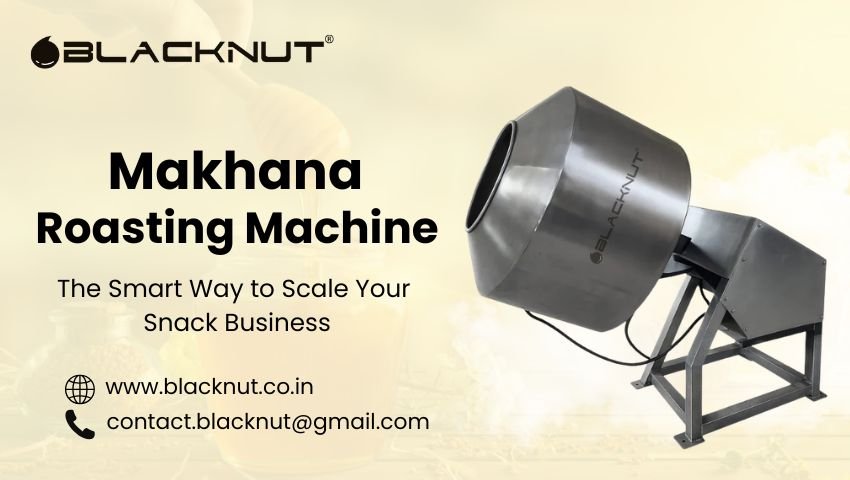
Makhana Roasting and Flavouring Machine: Price, How It Works & How to Choose
Flavoured makhana is seen as a premium snack that people are willing to pay more for. When you add flavours, your profits can go up quite a bit. This depends on the cost of plain makhana, the flavours you choose, your packaging, and how much you produce. asdsdssds
And consistency starts with one machine.
A Makhana Roasting and Flavouring Machine.
Get the right one and every packet you sell tastes exactly the same. Your customers come back. Your brand grows.
Get the wrong one and your roasting temperature varies batch to batch. Your flavour coating is uneven. Your makhana loses crunch within days. And no amount of branding fixes a bad product.
This guide will help you choose correctly.
Here is what you will find inside:
What a makhana roasting and flavouring machine actually does
How the roasting process works step by step
Real 2026 price ranges, honest numbers
Key specs to check before buying
What to look for in a manufacturer
Why Blacknut's machine is built specifically for this job
Let's get into it.
Who Is This Guide For?
Before we go further, let's make sure this is the right guide for you.
You are in the right place if you are:
Starting a flavoured makhana brand and need your first commercial roasting and flavouring machine
Currently roasting manually, by hand with iron pans, and want to upgrade to a machine for consistency and higher output
Already running a processing unit but your current machine gives uneven results, flavour coating is inconsistent or crunch disappears quickly after packaging
Scaling up production and need a machine that can handle higher daily volumes without compromising quality
Evaluating the makhana business and want to understand what a roasting machine costs and what it does before you invest
This guide is not for you if:
You are looking for a makhana popping machine, that is a separate step. Check our Makhana Popping Machine instead
You are looking for a complete production line, checkout our Makhana Processing Plant
If you said yes to any of the first five, keep reading. Everything you need is below.
What is a Makhana Roasting and Flavouring Machine?
Let's start with the basics.
A Makhana Roasting and Flavouring Machine is a commercial food processing machine that does two jobs in one:
Job 1: Roasting It heats plain popped makhana to the right temperature. This makes the makhana crunchy, removes any remaining moisture, and prepares it to absorb flavour coating evenly.
Job 2: Flavouring It coats the roasted makhana with your chosen seasoning, dry powder or liquid, while tumbling it continuously. This ensures every single piece gets evenly coated with flavour.
Both jobs happen inside the same machine in one continuous process.
Without this machine you are doing both steps manually. The problem with manual roasting is simple, human hands cannot maintain exact temperature consistency across every batch. Manual roasting can lead to batch-to-batch variation in temperature and finish. Your product quality varies and customers notice.
A commercial makhana roasting and flavouring machine removes that variable completely.
How Does the Roasting and Flavouring Process Work?
Here is the step by step process inside a commercial makhana roasting and flavouring machine:
Step 1: Loading Plain popped makhana is loaded into the rotating drum of the machine. Food-contact parts are commonly made from food-grade stainless steel such as SS304, depending on the manufacturer’s design.
Step 2: Roasting Roasting temperature depends on product moisture, batch size, and machine design, and should be set according to the manufacturer’s operating range. The drum rotates continuously so every piece gets even heat exposure. No burning. No uneven roasting.
Step 3: Temperature Control A digital temperature controller monitors and maintains the exact temperature throughout the roasting cycle. Stable temperature control helps improve batch consistency.
Step 4: Flavor Coating Once roasting is complete the machine sprays or tumbles your flavour seasoning, peri-peri powder, cheese blend, salt and pepper, or any other dry seasoning, onto the makhana while the drum continues rotating. Every piece gets coated.
Step 5: Cooling The machine cools the batch quickly after flavouring. Controlled cooling helps preserve product texture before packaging.
Step 6: Discharge The finished flavoured makhana is discharged from the drum ready for immediate packaging.
Cycle time varies by batch size, moisture level, and machine configuration.
Makhana Roasting Machine Price in India
This is what most people want to know first.
Indicative market pricing for makhana roasting and flavouring machines varies widely by capacity, automation, and configuration. For roasting and flavouring machines specifically, here is a more detailed breakdown:
Important note on price:
The cheapest machine is rarely the best investment.
Machines without proper temperature control can make it harder to maintain consistent product quality. Your product quality varies. Customers complain. Returns happen. The cost of that inconsistency, in lost customers and damaged reputation, is far higher than the price difference between a basic and a proper machine.
Always match the machine to your production target, not just your budget.
Looking for a trusted makhana machine manufacturer in India? Read our complete buyer's guide, Makhana Machine Manufacturer in India
Can you get a subsidy?
Yes. Under PMFME, eligible micro food processing enterprises can receive credit-linked capital subsidy of 35% up to a maximum of ₹10 lakh for individual units. A makhana roasting and flavouring machine may be covered as part of an eligible micro food processing project, subject to scheme norms and approval.
Key Specs to Check Before Buying
Do not buy any makhana roasting machine without checking these specifications:
1. Temperature Control This is the most important spec. The machine must have a digital temperature controller that maintains exact heat throughout the roasting cycle. Without this your results will be inconsistent.
Ask: Does this machine have PID temperature control?
2. Drum Material All food contact surfaces must be food grade SS304 stainless steel. This is not optional, it is an FSSAI requirement for licensed food businesses in India.
Ask: What grade of stainless steel is the drum made from?
3. Capacity: Realistic Output The spec sheet will show maximum capacity. In real daily operations you will typically get 70 to 80 percent of the rated capacity.
Ask: What is the actual output per hour under normal operating conditions, not the spec sheet maximum?
4. Heating Source Makhana roasting machines use either:
Electric heating: easier temperature control, typically higher power cost depending on tariff
LPG or gas heating: may suit sites with lower fuel cost or existing gas infrastructure, depending on operating economics.
5. Drum Size and Batch Capacity Larger drums mean bigger batches but require more space and higher upfront cost. Match drum size to your daily production target.
6. Flavouring System Check how the machine applies flavour coating:
Dry tumbling: good for dry powder seasonings
Spray coating: better for liquid or oil-based flavours
Combined system: most flexible, handles both
7. Cooling System Does the machine have an integrated cooling system or do you need to cool the product separately after discharge? Integrated cooling saves time and preserves crunch better.
8. Warranty and After Sales Support Get warranty terms in writing. Minimum 1 year on manufacturing defects. Confirm spare parts availability and technician response time before purchasing.
What Flavours Work Best in a Commercial Makhana Roasting Machine?
Common market flavours include:
High sellers in retail:
Peri-Peri
Cheese and Herbs
Classic Salt and Pepper
Himalayan Pink Salt
Pudina (Mint)
Premium and gifting segment:
Caramel
Dark Chocolate
Truffle Salt
Flavours commonly considered for export markets:
Classic Salted
Lightly Spiced
Herb and Garlic
A good makhana roasting and flavouring machine handles all of these. The key is temperature precision and even tumbling, which ensures every piece gets coated the same way regardless of which flavour you are using.
If you are planning to start a makhana processing business, read our complete guide: How To Start Makhana Business In India
Manual Roasting vs Machine Roasting
Many people start with manual roasting to save money. Here is the honest comparison:
Payback period depends on capacity utilisation, labour cost, product mix, and sales realisation.
Why Blacknut's Makhana Roasting and Flavouring Machine
At Blacknut we build machines specifically for the makhana industry, not generic food machines adapted for makhana.
Our Makhana Roasting and Flavouring Machine is built for makhana processing and focused on temperature control, uniform tumbling, and easy cleaning.
PID temperature control: precise heat management for consistent roasting every batch
Food grade SS304 drum:uses food-contact materials selected to align with applicable FSSAI requirements
Continuous tumbling system: ensures uniform flavour coating on every piece
Integrated cooling: locks in crunch immediately after flavouring
Easy cleaning: drum design allows thorough cleaning between flavour batches
Real capacity output: We share tested output figures and practical operating guidance, not just maximum theoretical capacity
After sales support: our team is available after installation not just before the sale
Operator training: we train your team to run the machine correctly from day one
We offer configurations for different production targets and budget bands.
Contact Blacknut today for a free consultation and honest price quote
Conclusion
Your roasting machine is not just equipment.
It is the reason your product tastes the same in packet number one and packet number ten thousand.
It is the reason your customers come back.
It is the reason your brand earns trust.
Invest in the right makhana roasting and flavouring machine, one with proper temperature control, food grade construction, and a manufacturer who supports you after the sale.
That single decision will define the quality of everything you produce.
Ready to find the right machine for your production scale?
Contact Blacknut today, free consultation, honest price guidance, and a machine built specifically for makhana.
FAQs -
What is a makhana roasting and flavouring machine used for?
It roasts plain popped makhana to the right temperature for crunch and then coats it evenly with your chosen flavour seasoning, all in one continuous process. It is the core machine for any flavoured makhana business.
How much does a makhana roasting machine cost in India in 2026?
Indicative prices can vary widely by capacity, automation, and supplier. Prices range from ₹1.5 lakh for basic semi-automatic machines to ₹25 lakh or more for high capacity fully automatic lines. For a mid-range machine producing 50 to 100 kg per hour expect to invest ₹7 to ₹15 lakh.
What is the capacity of a commercial makhana roasting machine?
Capacity ranges from 20 kg per hour for small scale machines to 200+ kg per hour for large continuous processing lines. Always ask the manufacturer for actual real-world output, not just the spec sheet figure.
Which fuel is better for a makhana roasting machine, electric or LPG?
Both work well. Electric heating is cleaner and easier to control, better for precise flavouring. LPG has lower running costs, better for high volume production where fuel cost is a significant factor. Your choice depends on your daily production volume and fuel availability.
Can one machine handle multiple flavours?
Yes. A single machine can often handle multiple flavours, provided it is cleaned properly between batches. Most commercial operations run 3 to 5 flavour variants on the same machine.
Is a makhana roasting machine eligible for PMFME subsidy?
Yes. The PMFME Scheme offers up to 35% credit-linked subsidy on food processing machinery including makhana roasting machines. Contact Blacknut for guidance on the application process.
How long does it take to roast one batch of makhana?
One complete cycle, loading, roasting, flavouring, and cooling, takes approximately 15 to 25 minutes depending on batch size and machine capacity.
How do I maintain a makhana roasting machine?
Clean the drum after every flavour batch to prevent flavour contamination. Follow the manufacturer's maintenance schedule for motor and heating element checks. Use only food-safe cleaning agents. Blacknut provides a complete maintenance guide and operator training with every machine.
What is the shelf life of makhana made with a commercial roasting machine?
“Shelf life depends on moisture control, packaging, storage conditions, and flavour system used. Vacuum sealed or nitrogen flushed packs can extend this to 6 to 9 months.
How do I start a flavoured makhana business?
Start with sourcing good quality popped makhana, invest in a reliable roasting and flavouring machine, get your FSSAI license, and develop 2 to 3 signature flavours to launch with. For the complete step by step guide read our blog, How To Start Makhana Business in India