
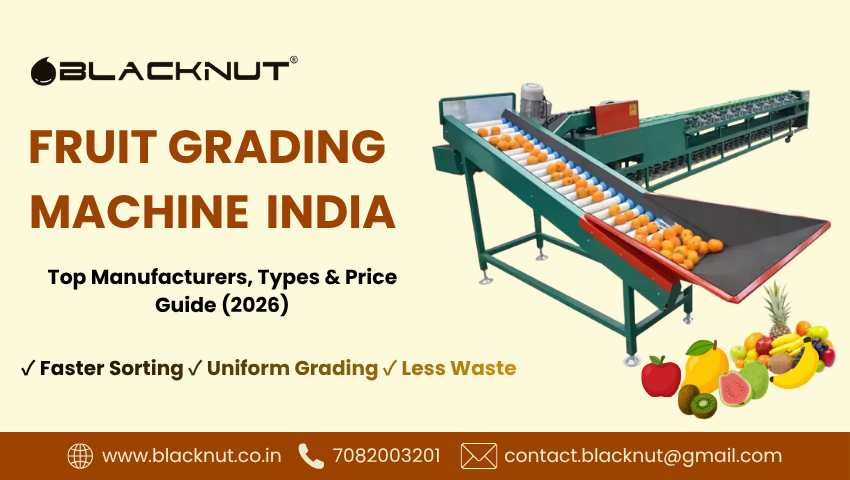
Fruit Grading Machine India: Top Manufacturers, Types & Price Guide (2026)
Anyone who has spent a season sorting mangoes or apples by hand knows the drill—sore backs, mismatched sizes going into the same crate, and buyers rejecting a whole lot because a handful of fruits didn't meet grade. That's exactly the problem a fruit grading machine india buyers are searching for right now is meant to solve. Whether you run a five-acre orchard or a mid-sized packhouse, grading equipment has quietly become one of the smartest investments in post-harvest handling.
This guide walks through what's actually available in the Indian market, how these machines work, what they cost, and where you can source one without getting stuck with an oversized system you didn't need. Whether you're looking at a basic roller unit or a full-fledged automatic fruit sorting machine with sensors built in, the goal is the same — consistent grading with less manual effort.
Best fruit grading machine available in India
There isn't a single "best" machine — it really depends on your crop, volume, and budget. That said, a few categories consistently come up as favourites among Indian growers and exporters:
Roller/conveyor grading machines — simple, mechanical, and great for apples, oranges, and pomegranates. Low maintenance, easy to run with minimal training.
Weight-based graders — sort fruit by weight rather than just size, which matters a lot for citrus and mangoes where shape can be irregular.
Sensor and camera-based sorters — the more advanced end, using sensors to check size, weight, or color, and in some models even surface defects and ripeness.
For most small-to-mid scale operations, a roller-type or weight-based fruit grading machine hits the sweet spot between cost and reliability. Exporters dealing with premium markets tend to lean toward a sensor-driven automatic fruit sorting machine because buyers there are strict about cosmetic quality.
One machine worth shortlisting here is the Fruit & Vegetable Grading Machine from Blacknut Agrifood Machinery. It's built to grade by size, weight, or color depending on what your crop needs, with adjustable channels so the same unit can be reconfigured across mangoes, apples, oranges, lemons, tomatoes, potatoes, onions, guavas, and kiwis rather than being locked into one produce type. The machine is made from food-grade stainless steel with energy-efficient motors, which keeps running costs down over a full season, and it's already in use across pack houses, food processing units, and agricultural cooperatives.fruit grading machine uses intelligent sensors and innovative rollers to detect and grade each fruit or vegetable based on set parameters.
This guarantees consistent size and quality, making your produce market-ready. If you fall into the small-to-mid scale category described above, it's a practical, India-manufactured option to get a quote on before comparing anything imported.
How do automated fruit grading machines improve efficiency?
Manual sorting is slow, inconsistent, and honestly, exhausting for workers during peak season. An automatic fruit sorting machine changes that equation in a few concrete ways, and it's a big reason why more packhouses are moving away from all-manual lines every year:
Speed — a mid-range machine can grade 1–2 tonnes per hour, something that would take a team of 8–10 workers an entire day to match.
Consistency — machines don't get tired by 4 PM. Grade quality stays the same at the start and end of a shift.
Reduced wastage — better sorting means fewer damaged fruits mixed into premium lots, which cuts down on rejections at the buyer's end.
Labour savings — this one matters a lot right now, since skilled sorting labour is getting harder to find and more expensive during harvest windows.
Farmers who've switched from hand-grading often say the real win isn't just speed — it's the ability to sell at a better price because the grading is uniform enough to meet export or organised retail standards.
Affordable fruit grading machines for small farms in India
Not every farm needs a six-figure setup. There's a genuine market now for compact, budget-friendly graders built specifically for small and marginal farmers. These usually:
Handle 500 kg to 1 tonne per hour
Designed by experienced professionals ensuring high performance and reliability.
Cost starts from ₹2–3 lakh for basic mechanical models and can go up to ₹10 lakh or more for advanced automatic machines.
What are the key features to look for in a fruit sorter?
Before signing on the dotted line, it helps to actually compare specs rather than just going by price. This applies whether you're eyeing a basic manual grader or a fully loaded automatic fruit sorting machine. A few things worth checking:
Grading capacity (kg/hour) — match this to your actual harvest volume, not your dream volume
Number of grading lanes/outlets — more lanes mean finer size categories
Build material — food-grade stainless steel lasts longer and won't bruise soft fruits
Power requirement — single-phase vs three-phase changes where you can install it
Adjustability — can it be recalibrated for different fruits, or is it built for one crop only?
After-sales support — spare parts and service availability matters more than the brochure specs once the machine is actually running in your shed
If you're also handling produce beyond fruit, it's worth asking the supplier whether the same unit doubles as a vegetable grading machine, since a lot of manufacturers now build multi-purpose lines that handle both categories with minor adjustments.
How do fruit grading machines work in Indian agriculture?
The basic mechanics are simple even if the technology behind them isn't. In a typical automatic fruit sorting machine, the process generally follows four stages, based on how Indian manufacturers like Blacknut design their systems:
Feeding—fruits or vegetables are loaded onto the conveyor belt.
Inspection and sensing — sensors read the size, weight, or colour of each item as it moves through.
Grading — the unit automatically separates produce into different grade categories based on those readings.
Collection—graded fruits or vegetables drop into separate bins or trays, ready for packaging.
More advanced units add a layer on top of this — cameras that scan for skin blemishes, color uniformity, or shape defects, rejecting fruits that don't pass visual standards even if they're the right size.
In the Indian context, this matters especially for crops like mangoes, oranges, pomegranates, apples, and bananas, where export buyers and modern retail chains (think big supermarket chains) have very specific grading requirements. Manufacturers like Blacknut Agrifood Machinery design their grading lines to handle a fairly wide produce range—mangoes, apples, oranges, lemons, tomatoes, potatoes, onions, guavas, and kiwis, among others—which shows how flexible modern roller-and-sensor systems have become compared to older single-crop machines. A machine takes the guesswork — and the human bias — out of that process.
Where to buy fruit grading machines in India?
A few practical routes:
Direct from manufacturers — usually the most cost-effective, and you can visit their facility to see a demo before buying. For instance, Blacknut Agrifood Machinery lets you check specifications and request a quote directly through their website before you even schedule a facility visit.
Agricultural equipment expos—trade fairs are good places to compare multiple brands side by side.
B2B marketplaces—platforms list dozens of verified sellers with pricing and specs.
Whichever route you go, ask for a live demo with your actual crop, not just a promotional video. Grading behavior can vary quite a bit between fruit varieties. If you'd rather start research online, Blacknut's website has product specs and enquiry options for their fruit and vegetable grading range, which is a decent starting point before you go site-visiting.
Cost of a commercial fruit grading machine in India
Pricing varies widely based on capacity and automation. According to verified pricing shared by Indian manufacturers like Blacknut Agrifood Machinery, basic mechanical grading units typically start around ₹2–3 lakh, while fully automatic sensor-based machines can go up to ₹10 lakh or more, depending on the fruit type and throughput needed.
Looking beyond fruit grading machines? Check out our guide on How to Choose the Best Fruit and Vegetable Processing Machine Manufacturer ? to understand how to evaluate machinery quality, customization options, after-sales support, and long-term value before making a purchase.
Frequently Asked Questions
1. What is the Top companies manufacturing fruit grading machines in India?
One example of an established Indian manufacturer in this space is Blacknut Agrifood Machinery Pvt. Ltd., based out of Ambala, Haryana. Their fruit and vegetable grading line is built around stainless steel construction, adjustable grading channels for different produce sizes, and energy-efficient motors, and the company backs its machines with after-sales technical support
2. What does a fruit grading machine cost in India?
Basic mechanical models generally start around ₹2–3 lakh, while fully automatic, sensor-based machines can cost ₹10 lakh or more depending on capacity and automation level.
3. Which fruits and vegetables can these machines handle?
Most modern graders are built to handle a wide range—mangoes, apples, oranges, lemons, tomatoes, potatoes, onions, guavas, and kiwis are common examples, with adjustable settings for different sizes.
4. What is another name for a fruit grading machine?
It's often called a fruit grader, fruit sorting machine, size grader, or weight-based grading machine—the terms are largely interchangeable in the trade.