
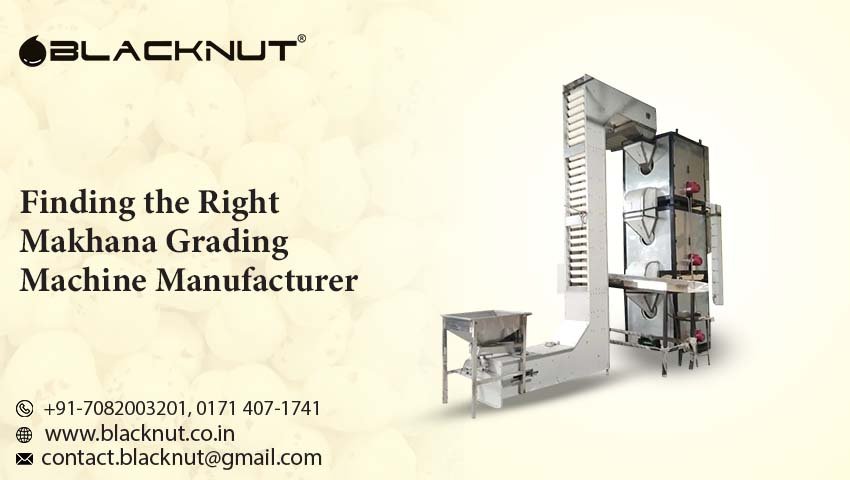
Makhana Grading Machine - The Complete 2026 Buyer's Guide for India
You can grow the best makhana. Process it perfectly. Roast it beautifully.
But if your product goes to market in mixed sizes, buyers will not pay a premium price for it.
Many retailers and export buyers prefer size‑consistent products and may reject inconsistent batches. And you may end up selling at commodity prices instead of earning more for premium grades.
Size consistency is what separates commodity makhana from premium makhana.
And size consistency is best achieved with a dedicated machine, the Makhana Grading Machine.
This guide will help you understand exactly what a makhana grading machine does, what it costs, and how to choose the right one for your production scale.
Here is what you will find inside:
What a makhana grading machine actually does
How the grading process works step by step
Real 2026 price ranges, honest numbers
Key specs to check before buying
Manual grading vs machine grading, the real comparison
Why Blacknut's grading machine is built specifically for makhana
Let's get into it.
Who Is This Guide For?
Not everyone looking for a makhana grading machine is at the same stage.
Find yourself below, then keep reading.
You are in the right place if you are:
Setting up a new makhana processing unit: You want to understand where a grading machine fits in your production line, what it costs, and whether you need it from day one or can add it later.
Currently grading manually: You or your team are sorting makhana by hand. It is slower and less consistent, and big and small pieces can get mixed together, which reduces your chances of getting premium prices.
Selling to retailers or export buyers: Your buyers ask for size‑consistent product: 4 suta, 5 suta, 6 suta grades, and a grading machine helps you deliver this more reliably.
Running a processing unit and ready to upgrade: Your current grading setup is a bottleneck. You need higher throughput and more accurate size separation to meet growing demand.
An investor evaluating makhana processing: You want to understand what a grading machine costs and what role it plays before committing your investment.
This guide is not for you if:
You are looking for makhana grading machine prices specifically, read our dedicated price guide: Makhana Grading Machine Price in India
You need a complete production line overview, read How To Start Makhana Business In India
What Is a Makhana Grading Machine?
Let's start with the basics.
Makhana grading means separating popped makhana into different size categories, small, medium, large, and extra large.
In India these sizes are measured in suta, a traditional unit used specifically for makhana grading:
6 suta and above: largest size, highest price, premium retail and export
5 suta to 6 suta: large size, strong retail demand
4 suta to 5 suta: medium size, standard retail
Below 4 suta: small sizes including thurri and murah, lowest price
The price difference between 4 suta and 6 suta makhana can vary, often by ₹200 to ₹400 per kg or more depending on market conditions.
A Makhana Grading Machine automatically separates your batch into these size categories, so you can package and price each grade correctly.
Without it, you may either mix all sizes and sell at a lower average price, or rely on manual sorting, which is slower and less consistent.
How Does a Makhana Grading Machine Work?
Here is exactly what happens inside a commercial makhana grading machine:
Step 1: Feeding: Popped makhana is fed into the machine from the top. The feed rate is controlled so the machine is not overloaded and grading accuracy stays high.
Step 2: Rotating Screen Separation: The machine uses a rotating screen system with multiple mesh sizes. As makhana tumbles through the rotating screens, larger pieces stay on top screens and smaller pieces fall through to lower screens.
Each screen size corresponds to a makhana grade:
Top screen: 6 suta and above
Second screen: 5 to 6 suta
Third screen: 4 to 5 suta
Bottom: below 4 suta including thurri and murah
Step 3: Automatic Screen Cleaning: Screens get clogged during operation which reduces accuracy. A good grading machine has automatic screen cleaning brushes that clean continuously while the machine runs, maintaining grading accuracy throughout the batch.
Step 4: Separate Discharge: Each grade has its own separate outlet fitted with a bag holder. So 6 suta makhana goes directly into one bag. 5 suta into another. And so on. No mixing. No re-sorting needed.
Step 5: Control Panel: The machine is operated via a control panel that manages speed, feed rate, and screen settings. Different makhana varieties or sizes can be accommodated by changing the screens.
A complete grading cycle processes a full batch much faster than manual sorting, with better accuracy and consistency.
Looking for a trusted makhana machine manufacturer in India? Read our complete buyer's guide, Makhana Machine Manufacturer in India
Makhana Grading Machine Price in India - 2026
Here are indicative price ranges based on current market data.
Blacknut's standard Makhana Grading Machine starts at approximately ₹4,25,000. The higher‑capacity automatic popped makhana grading machine is around ₹9,00,000.
Here is the full market breakdown:
By production scale:
Can you get a subsidy?
Under the PMFME Scheme, eligible micro food processing businesses may receive credit‑linked subsidies on food processing machinery. A makhana grading machine may be part of an eligible project, subject to scheme rules.
Why Grading Matters So Much - The Money Angle
Most people underestimate how much grading affects their revenue.
Here is a real example:
Without grading, selling mixed size makhana:
Mixed size makhana sells at ₹600 to ₹700 per kg
Buyers apply the lowest grade price to the whole batch
With grading, selling size-separated makhana:
6 suta grade sells at ₹900 to ₹1,100 per kg
5 suta grade sells at ₹750 to ₹900 per kg
4 suta grade sells at ₹600 to ₹750 per kg
Thurri and murah sell separately at lower prices but are not dragging down the premium grades
On 100 kg of makhana processed per day, grading can add significant revenue compared to selling mixed sizes, depending on market prices.
Many units that invested in a precise makhana grader report better size consistency, which can help fetch better prices and reduce waste.
At these volumes, a grading machine can start paying for itself through additional revenue within a few months, depending on your production and pricing.
Manual Grading vs Machine Grading - The Real Comparison
The labour cost saving alone can be significant, and many grading machines pay for themselves within 6 to 12 months, even before counting the revenue gain from better pricing.
Key Specs to Check Before Buying
Do not buy any makhana grading machine without checking these:
1. Number of Grade Separations: A good machine separates into at least 4 grades, 6 suta and above, 5 to 6 suta, 4 to 5 suta, and below 4 suta. Some machines only give 2 or 3 separations, which limits your pricing flexibility.
Ask: "How many size grades does this machine separate into?"
2. Screen Cleaning System: Screens clog during operation. Without automatic cleaning, grading accuracy drops as the batch progresses and you need to stop and clean manually.
Ask: "Does this machine have automatic continuous screen cleaning?"
3. Screen Changeability: Different makhana varieties and crop seasons produce different size distributions. Screens that can be changed quickly let you adapt to different batches without downtime.
Ask: "How quickly can screens be changed and what is the process?"
4. Build Material: Food contact surfaces should be made from safe, food‑grade, non‑corrosive materials that meet applicable FSSAI requirements.
Ask: "What material are the screens and food contact surfaces made from?"
5. Actual Throughput Capacity: Spec sheets show maximum rated capacity. Actual throughput can be lower, depending on raw material and operating conditions.
Ask: "What is the actual throughput per hour under normal operating conditions?"
6. Number of Outlets and Bag Holders: Each grade needs its own outlet fitted with a bag holder for direct collection. Machines with fewer outlets than grades mean you are manually separating after the machine, defeating the purpose.
Ask: "How many separate grade outlets does this machine have?"
7. Warranty and After Sales Support: Get warranty terms in writing. Confirm spare parts availability and technician response time before purchasing.
Where Does the Grading Machine Fit in Your Production Line?
Understanding this helps you plan your unit correctly.
The correct production sequence is:
Raw makhana seeds ↓ Makhana Popping Plant: converts seeds to popped makhana ↓ Makhana Sorting Machine: removes impurities and unpopped seeds ↓ Makhana Grading Machine: separates by size into grades ← here ↓ Makhana Roasting and Flavouring Machine: for flavoured products ↓ Packaging
The grading machine comes after sorting and before roasting or packaging. Grading before roasting ensures each size grade roasts evenly, because different sizes need slightly different roasting times.
If you are making plain packaged makhana, grading directly feeds into packaging. If you are making flavoured makhana, grading feeds into the roasting and flavouring machine.
Why Blacknut's Makhana Grading Machine
Blacknut is based in Ambala, Haryana and builds machines specifically for the makhana industry.
Our Makhana Grading Plant is designed for makhana grading, with the practical needs of the business in mind.
Here is what makes it different:
4 grade separation: 6 suta and above, 5 to 6 suta, 4 to 5 suta, and below 4 suta including thurri and murah
Rotating screen type design: proven most effective for makhana's irregular shape and texture
Automatic continuous screen cleaning brushes: maintains accuracy throughout every batch
Easily changeable screens: adapt to different makhana varieties and crop seasons quickly
SS304 food grade construction: designed for food processing use
Separate bag holder outlets for each grade: direct collection with no re-sorting
Control panel: easy operation and speed control
After sales support: we stay available after installation too
Operator training included: your team learns to run the machine correctly from day one
Whether you are grading small or large volumes, we can help you look at the right configuration for your scale and budget.
Contact Blacknut today for a free consultation and honest price quote
FAQs: Makhana Grading Machine
What is a makhana grading machine used for?
It separates popped makhana into different size categories, 6 suta, 5 suta, 4 suta, and below, automatically. This allows processors to price and package each grade separately, earning significantly more revenue than selling mixed-size makhana at a single commodity price.
How much does a makhana grading machine cost in India in 2026?
Indicative prices can vary from around ₹89,500 for basic semi‑automatic machines to ₹15 lakh and above for large‑scale grading plants. Blacknut's standard automatic makhana grading machine starts at ₹4,25,000. Contact Blacknut for an exact quote based on your daily production volume.
Q3. What is a suta in makhana grading?
Suta is a traditional size measurement used specifically for makhana in India. Higher suta means larger size. 6 suta and above is the largest and most premium grade. Below 4 suta includes smaller sizes called thurri and murah which sell at lower prices. A grading machine separates your batch into these categories automatically.
Do I need a grading machine from day one or can I add it later?
If you are selling to retailers or export buyers, you need it from day one. They require size consistency. If you are selling locally at commodity prices initially, you can add it when you are ready to upgrade your pricing. But the sooner you grade, the sooner you earn premium prices.
How many size grades does a good makhana grading machine separate into?
A good machine separates into at least 4 grades. Blacknut's grading machine separates into 4 grades, 6 suta and above, 5 to 6 suta, 4 to 5 suta, and below 4 suta, with separate outlets for each grade.
Is a makhana grading machine eligible for the PMFME subsidy?
Yes. The PMFME Scheme offers up to 35% credit-linked subsidy on food processing machinery including makhana grading machines. Contact Blacknut for guidance on the application process.
What is the difference between manual grading and machine grading?
Manual grading is slower, often 20 to 40 kg per hour, can be inconsistent, and may require several workers depending on scale. Machine grading can handle higher volumes, often 100 to 500 kg per hour, with more consistent results and only 1 operator. Labour cost savings, along with better pricing, can help pay for the machine within 6 to 12 months in many cases.
Can the screens be changed to accommodate different makhana sizes?
Yes. On Blacknut's grading machine the screens can be easily changed as and when required, allowing you to adapt to different makhana varieties or crop seasons without significant downtime.
Where does the grading machine fit in the makhana production line?
After the sorting machine and before roasting or packaging. The sequence is: popping → sorting → grading → roasting and flavouring (if making flavoured products) → packaging.
How do I start a makhana processing business?
For the complete step by step guide on starting a makhana processing business, including investment, business models, licenses, and which machines you need, read our guide: How To Start Makhana Business In India
Conclusion
Every batch of makhana you process has a premium product mixed in with standard product.
Without a grading machine, you may end up selling all of it at a single average price.
With a grading machine, your 6 suta product can earn more per kg than a mixed batch would have.
On 100 kg processed per day that difference compounds into significant additional revenue every single month.
A makhana grading machine is not just equipment. It can be a direct revenue upgrade for your processing unit.
Ready to start grading, and start earning more?
Contact Blacknut today, free consultation, honest pricing, and a grading machine built specifically for makhana.