
Fruit Grading Machine: The Complete Guide for Farmers, Exporters, and Processors in India
If you've ever tried to grade mangoes or oranges by hand during peak season, you know how quickly it turns into a bottleneck. Workers get tired, grading gets inconsistent, and by the time you're done, the earliest-sorted fruit may have already started to soften. This is exactly the problem a fruit grading machine solves—and it's why more orchards, packhouses, and exporters across India are investing in one.
Whether you're a small farmer looking to reduce labor dependency or a large exporter chasing international quality standards, this guide covers everything—how these machines work, what they cost, and where to actually find a fruit grading machine india exporters and processors trust for consistent output.
Best Fruit Grading Machines Available in India
India's fruit grading machine market has grown a lot over the past decade, partly driven by export demand for mangoes, pomegranates, and citrus fruits. In fact, demand for a reliable fruit grading machine India exporters can depend on has pushed several domestic manufacturers—including Blacknut Agrifood Machinery — to upgrade their sensor and grading capabilities in the last few years.
For most small- to mid-scale operations, a roller-type or weight-based fruit grading machine hits the sweet spot between cost and reliability.
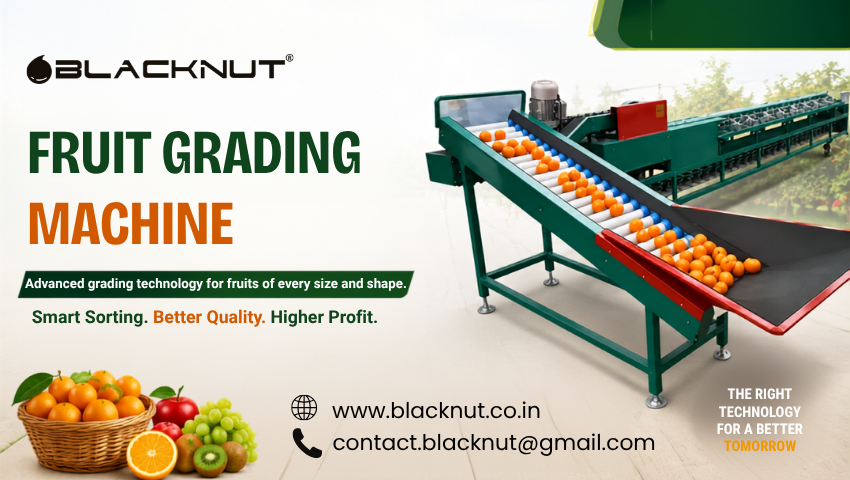
One machine worth shortlisting here is the Fruit & Vegetable Grading Machine from Blacknut Agrifood Machinery. It's built to grade by size, weight, or color depending on what your crop needs, with adjustable channels so the same unit can be reconfigured across mangoes, apples, oranges, lemons, tomatoes, potatoes, onions, guavas, and kiwis rather than being locked into one produce type. The machine is made from food-grade stainless steel with energy-efficient motors, which keeps running costs down over a full season, and it's already in use across pack houses, food processing units, and agricultural cooperatives. If you fall into the small-to-mid-scale category described above, it's a practical, India-manufactured option to get a quote on before comparing anything imported.
How Does an Optical Fruit Sorter Work?
Optical sorting is the most advanced grading technology available right now, and understanding how it works helps explain why it costs more than mechanical systems:
Fruit moves along a conveyor at high speed, usually rotating so all sides are visible
High-resolution cameras (sometimes combined with infrared sensors) capture images from multiple angles
Software analyzes color uniformity, size, shape, and surface defects like bruising or insect damage
Based on preset grading rules, air jets or mechanical diverters sort each fruit into the correct output lane
The entire process happens in milliseconds per fruit, which is why an automatic fruit sorting machine using optical technology can process volumes that would take a large manual team an entire day. This is also the same technology base used in many machines marketed as an automatic fruit sorting machine for mixed-crop operations, since the camera and software layer doesn't change much between fruit types. The trade-off is that these systems need regular calibration, especially when switching between fruit varieties with different skin tones or shapes.
How Do Fruit Grading Machines Work in Sorting Produce?
At a broader level, most fruit grading machines follow a similar sequence regardless of technology level:
Intake – Fruit is loaded onto a conveyor or feeding tray, often after initial washing
Singulation – The machine spaces out fruit so each item is measured individually
Measurement – Sensors, cameras, or mechanical slots evaluate size, weight, or visual quality
Sorting – Fruit is diverted into different output lanes or bins based on grade
Packing-ready output—Sorted fruit is collected by grade, ready for packing or storage
This is essentially how every fruit sorting grading machine operates, whether it's a basic roller system or a full sensor-based setup—only the measurement step changes based on the technology used.
Benefits of Using Automated Fruit Grading Systems
Switching from manual sorting to an automated system isn't just about speed. Here's what businesses typically notice:
Consistency – The machine grades the same way every time, unlike tired workers late in a shift
Labor savings – Fewer workers needed for sorting means lower ongoing costs
Reduced fruit damage – Automated handling is often gentler than repeated manual handling
Better pricing—Consistent, accurate grading helps you meet buyer specifications and command premium rates
Faster processing—Machines can clear large harvest volumes in a fraction of the time
For export-focused businesses, consistent grading isn't optional—most international buyers have strict quality specifications, and manual sorting struggles to meet that bar reliably at scale.
Top Features to Look for in a Fruit Grading Machine for Commercial Use
If you're buying for commercial-scale operations, a few features matter more than others:
Throughput capacity—Should match your peak harvest volume, not just average daily output
Multi-fruit compatibility—Adjustable sizing and calibration if you handle more than one fruit type
Gentle handling mechanisms – Padded rollers or cushioned drop points to minimize bruising
Easy cleaning and maintenance—Look for stainless steel components that are food-safe and simple to wash
Local service support—Downtime during harvest season is costly, so nearby technical support matters
It's also worth asking suppliers directly about the fruit grading machine price for your required capacity before comparing specs on paper—pricing structures vary a lot between manufacturers even for similar-looking machines. If you're browsing listings online, filtering by a specific fruit grading machine for sale capacity range early on saves time versus scrolling through machines that are either too small or built for industrial-scale operations.
Leading Manufacturers of Fruit Sorting Equipment in India
India has a solid base of domestic manufacturers, many of whom have been building sorting and grading equipment for over a decade. Whether you're after a simple fruit sorting grading machine or a fully automated optical system, it's worth shortlisting fruit grading machine manufacturers who specialize in your specific crop rather than general-purpose equipment builders. When shortlisting fruit-grading machine manufacturers, look for companies that:
Have visible client references, ideally from farms or processors growing your specific fruit
Offer on-site installation and operator training, not just machine delivery
Provide clear warranty terms and locally stocked spare parts
Can demonstrate the machine on a live sample of your produce before you commit to buying
Manufacturing hubs in Nashik, Pune, and Hyderabad are particularly strong for fruit-specific grading equipment, given the concentration of fruit-growing regions nearby.
Frequently Asked Questions
1. What's the difference between a vegetable grading machine and a fruit grading machine?
The core mechanics are often similar, but fruit tends to need gentler handling since it bruises more easily, while a vegetable grading machine can usually handle sturdier, more direct contact. Many manufacturers now build combined fruit and vegetable grading machine systems that adjust handling intensity based on the produce type being processed, which is a practical option if your operation deals with both.
2. Can one machine handle multiple fruit varieties, or do I need separate machines for each?
Most modern machines, including a typical automatic fruit sorting machine, can handle multiple varieties with adjustable settings, especially size and weight-based graders. However, if you're grading very different fruit types — say, mangoes and grapes — you may need separate calibration profiles or even separate equipment, since handling requirements differ significantly. This is also true for combined fruit and vegetable grading machine setups, where switching between produce categories often means reloading a different calibration profile.
3. Is it worth buying a used fruit grading machine to save money?
It can be, especially for basic mechanical or weight-based graders, which have fewer components that degrade over time. That said, always inspect the machine in person, check the condition of sensors and belts, and confirm spare parts are still available before buying used, particularly for optical sorting systems.
4. How long does it typically take to install and start using a fruit grading machine?
For basic semi-automatic machines, installation and operator training usually takes a day or two. Larger automatic or optical sorting systems can take a week or more, especially if calibration for your specific fruit variety is required. It's worth confirming installation timelines with your supplier before harvest season begins, so you're not caught mid-setup during peak volume.
Final Thoughts
Choosing the right fruit grading machine comes down to matching technology to your actual scale, crop type, and budget—not simply going for the most advanced system available.
Take time to compare a few manufacturers, ask for live demos on your actual produce, and factor in long-term service support alongside the upfront price.