
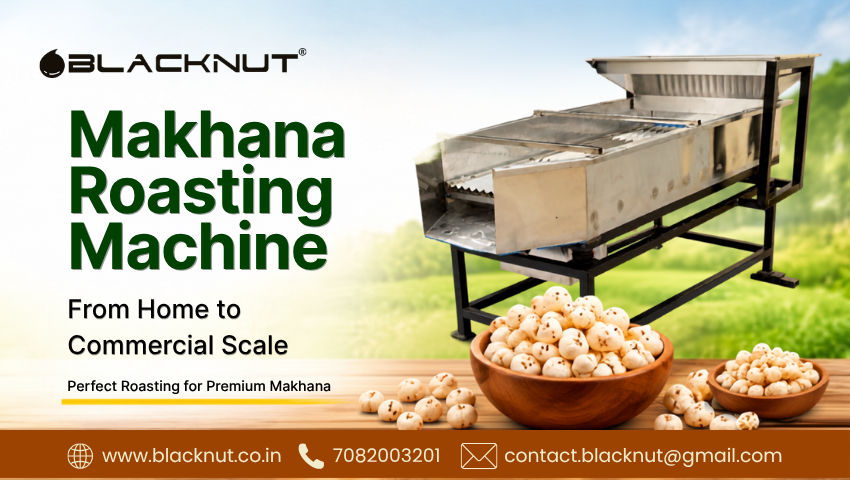
Makhana Roasting Machine: Everything You Need to Know Before You Buy
If there's one stage in the entire makhana-making process that decides whether your final product tastes premium or just okay, it's roasting. You can have the best grading and packaging in the world, but if the roasting isn't right, the makhana comes out either burnt, chewy, or unevenly puffed—and customers notice immediately. That's exactly why picking the right makhana roasting machine matters so much, whether you're running a small home-based setup or a full commercial operation.
This guide covers the different types of roasting machines available, what pricing actually looks like in India right now, and how to pick a manufacturer you won't regret trusting your money with. And if you're at the very early planning stage, it also helps to understand where a roaster fits within a broader makhana processing machine setup, so you know what to add later as your business grows.
Best Makhana Roasting Machines Available in India
The Indian market has a mix of small local fabricators and established manufacturers building proper commercial-grade equipment. The gap between the two is usually quality control — a well-built roaster gives you even heat across every batch, while a cheaply made one leaves you with half-burnt kernels mixed with under-roasted ones.
Manufacturers like Blacknut have built their makhana roasting and flavouring machines specifically around this consistency problem, using rotating drums or continuous-motion systems that keep every seed moving through the heat evenly instead of just sitting near one hot spot. If you're comparing options, ask to see the roasting mechanism in action before you commit — a five-minute demo tells you more than any brochure.
What Are the Different Types of Makhana Roasting Machines?
Roasting machines generally fall into a few categories depending on scale and how automated you want the operation to be:
- Manual/small-batch roasters – basic drum setups where you control heat and timing yourself, common in home-based or very small units.
- Semi-automatic roasters – temperature control is built in, but loading and unloading still need manual handling.
- Fully automatic roasting machines – continuous feed systems with digital temperature control, minimal manual intervention, ideal for larger daily volumes.
- Combined roasting and flavouring machines – these integrate the roasting stage directly with seasoning application, so masala or flavoring gets applied right after roasting without transferring the batch elsewhere. This cuts down handling losses and keeps the whole process moving efficiently.
Which type makes sense for you really comes down to your daily volume and how hands-on you want to be with production.
How to Choose a Good Makhana Roasting Machine for Small Scale Business
If you're just starting out, don't get pulled into buying the biggest, most automated machine on the market — it's usually overkill and ties up capital you might need elsewhere. Instead, focus on:
- Batch size that matches your actual daily volume, not what you hope to hit in two years
- Simple temperature controls you can operate without hiring a specialist
- Compact footprint if you're working out of a small unit or home setup
- Basic maintenance requirements — something you or your staff can clean and service without calling a technician every week
A small makhana roasting machine for home or micro-business use should ideally let you scale up later by adding a grading or flavoring attachment, rather than forcing you to replace the whole unit once demand grows.
How to Choose the Right Makhana Roaster for Commercial Use?
Commercial buyers are playing a different game — here, consistency and throughput matter more than upfront cost. A few things worth checking before you sign off on a purchase:
- Uniform heat distribution – uneven roasting directly hurts your rejection rate and profit margins at scale
- Continuous operation capability – can the machine run for hours daily without overheating or needing frequent breaks?
- Hygiene and food-grade construction – stainless steel components that are easy to clean matter a lot once you're supplying retail or export clients
- Integration options – does it connect smoothly with a flavoring or packing line, or will you need separate manual transfer between stages?
- After-sales support – commercial operations can't afford a machine sitting idle for days waiting on a spare part
If you're supplying private-label brands or planning exports eventually, it's worth investing a bit more upfront in a machine built for consistency rather than the cheapest option on the table.
Top Makhana Roasting Machine Manufacturers in India
A handful of manufacturers genuinely specialize in makhana equipment rather than treating it as a side product. Blacknut Agrifood Machinery is one of them — they've spent over two decades working specifically on makhana mechanization, building relationships with farmers, cooperatives, and SHGs in Bihar to understand what actually breaks down in real production environments, not just lab conditions.
When you're shortlisting makhana roasting machine manufacturers, ask direct questions: how many roasting machines have they actually installed, do they have working units you can see in person or on video, and what happens if a part fails six months in. Manufacturers confident in their equipment won't dodge these questions.
Leading Manufacturers of Makhana Processing Equipment
Beyond just roasting machines, the better manufacturers usually offer full makhana processing plant solutions — covering cleaning, popping, grading, roasting, flavoring, and packaging as one connected system. This matters because buying piecemeal from different vendors often creates compatibility headaches down the line, where machines don't line up in capacity or don't integrate smoothly.
Blacknut, for instance, builds equipment across the entire makhana value chain, so a processor starting with just a roasting unit can later add a grading or popping machine from the same manufacturer without worrying about mismatched systems.
Cost of an Automatic Makhana Roasting Machine in India
This is usually the first question on everyone's mind, so let's get into actual numbers. The makhana roasting machine price in India varies quite a bit depending on capacity and automation level:
- Small/semi-automatic units – roughly ₹1.5 lakh to ₹4 lakh, suitable for home-based or small commercial setups
- Mid-range automatic roasters – around ₹5 lakh to ₹10 lakh, built for consistent daily commercial production
- Fully automatic roasting and flavouring machines – can run ₹10 lakh and above, especially when integrated with seasoning and dosing systems for retail-ready output
The makhana roasting and flavouring machine price typically sits higher than a standalone roaster since you're paying for the combined seasoning application system as well. Always ask your supplier whether the quoted number includes installation, training, and GST, since these add-ons can shift the final cost meaningfully.
Where Can I Buy a Commercial Makhana Roasting Machine Online?
Buying online has gotten a lot easier, but it's still worth doing your homework before transferring any money. Most established manufacturers now list their machines with specifications directly on their websites, and you can request quotes, brochures, or even video walkthroughs before committing.
Blacknut, for example, lets you enquire directly through their website or connect over WhatsApp for a quicker back-and-forth on pricing and specifications. Whatever platform you use, make sure you get everything — warranty terms, installation support, and payment terms — confirmed in writing before finalizing.
Where to Find Suppliers of Industrial Makhana Roasters?
For industrial-scale roasting setups, your best bet is going directly to manufacturers with an actual factory and export track record rather than local traders reselling smaller units. Look at:
Direct manufacturer websites – usually the most reliable source for accurate specs and pricing
If you're eventually looking at a full makhana roasting and packing machine setup for end-to-end production, it's worth choosing a supplier who can support that entire expansion path rather than someone who only sells one piece of the puzzle.
Final Word
The roasting stage isn't just another step in the process — it's genuinely the difference between a product that tastes premium and one that gets returned. Whether you're looking for a small home-scale unit or a fully automated commercial line, take the time to compare manufacturers properly, ask about after-sales support, and match the machine's capacity to your real production needs rather than what looks impressive on paper.
A good makhana roasting machine pays for itself through consistency alone — fewer rejected batches, better texture, and a product that keeps customers coming back.
Frequently Asked Questions
Q1. How do I roast makhana perfectly using a machine?
Perfect roasting comes down to controlled, even heat applied through continuous movement — usually via a rotating drum or conveyor system. This removes residual moisture and improves texture without scorching. Manual roasting can get you there in small batches, but a proper machine makes it repeatable at scale, which is where most home-based methods fall short.
Q2. Can a makhana roasting machine also handle flavoring?
Yes, many manufacturers now build combined roasting and flavouring units where seasoning gets applied right after roasting, in the same system. This cuts down manual transfer between stages and keeps the flavor coating more consistent across batches.
Q3. What is the difference between a semi-automatic and fully automatic makhana roaster?
A semi-automatic roaster gives you temperature control but still needs manual loading and unloading. A fully automatic one runs on continuous feed with digital controls and needs very little hands-on involvement — better suited for higher daily volumes.
Q4. Is a small makhana roasting machine suitable for home-based business?
Absolutely. Small and semi-automatic roasters are specifically built for home-based or micro-scale operations, and most can be upgraded later with grading or flavoring attachments as your volume grows, so you're not stuck buying a whole new setup down the line.
Q5. How much power does a commercial makhana roasting machine consume?
This varies by capacity and automation level, but energy efficiency is one of the biggest ongoing costs in daily operation. It's worth asking your supplier for actual power consumption figures (in kW) before buying, since roasting machines typically run for several hours a day.