
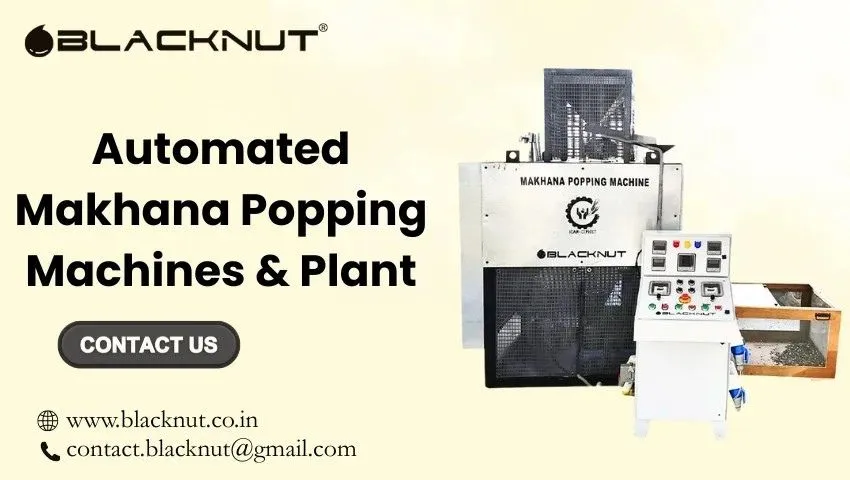
Industrial Makhana Popping Plant for Hygienic and Scalable Processing
India is the world’s largest producer of makhana (fox nuts or lotus seeds), with Bihar contributing the majority of production. Traditionally consumed as a healthy snack and used in Ayurvedic and culinary applications, makhana has evolved into a high-demand processed food product across domestic and international markets. As demand increases, businesses are increasingly shifting from manual methods to automated solutions such as a makhana popping machine and a complete makhana popping plant.
According to APEDA (Agricultural and Processed Food Products Export Development Authority), fox nuts are now part of India’s expanding processed food export basket, driven by rising global interest in plant-based and low-fat snacks.
Understanding the Makhana Processing Requirement
Raw makhana cannot be consumed directly. It must go through controlled heat treatment, commonly known as popping, followed by roasting, grading, and polishing. These steps improve texture, shelf life, taste, and food safety.
The Central Institute of Agricultural Engineering (ICAR-CIAE) highlights that uniform heat treatment and hygienic handling are critical in post-harvest processing of makhana to reduce wastage and maintain quality.
Manual popping and roasting methods often result in uneven quality, inconsistent size, and hygiene challenges. This is where a popping machine becomes essential.
What Is a Makhana Popping Machine?
A makhana popping machine is a mechanized system designed to apply controlled heat and motion to raw makhana seeds, allowing them to pop evenly without burning or under-processing. Unlike manual popping, which depends heavily on skilled labor, machines allow consistent output across batches.
As per food processing modernization guidelines published by the Ministry of Food Processing Industries (MoFPI), automation improves process control, reduces dependency on manual labor, and enhances food safety compliance.
When integrated into a full makhana popping plant, the machine becomes part of a continuous and scalable processing system.
Key Components & Process of a Makhana Popping Plant
1. Raw Makhana Cleaning & Pre-Processing
At this stage, dust, stones, and other unwanted impurities are removed from raw makhana. This improves hygiene and ensures smooth processing in the next stages.
2. Controlled Popping System
The makhana popping machine uses controlled heat to pop the seeds evenly. This results in uniform quality and significantly reduces wastage compared to manual processing.
3. Roasting & Moisture Balancing
After popping, makhana is roasted to regulate moisture levels. This enhances taste, crispness, and overall shelf life of the final product.
4. Grading & Size Separation
The grading system separates makhana based on size and quality, ensuring consistency in packaging and better market presentation.
5. Polishing Unit
Polishing removes loose skin and surface dust, giving the makhana a clean and visually appealing finish required for premium markets.
6. Hygienic Handling & Flow Design
Food-grade construction and smooth material flow help maintain hygiene while making cleaning and maintenance easier.
7. Scalability & Integration Readiness
The plant is designed for future expansion, allowing easy integration of additional systems or capacity upgrades, making it a long-term, growth-ready investment.
Why Automation Is Becoming Essential in Makhana Processing
The Food Safety and Standards Authority of India (FSSAI) emphasizes hygienic handling, controlled environments, and traceable processes for food manufacturing units. Manual systems often struggle to meet these evolving compliance requirements consistently.
Automated makhana popping plants help processors achieve:
• Controlled temperature and uniform popping
• Reduced contamination risk
• Improved batch consistency
• Easier scalability as demand grows
These benefits align with global food processing trends highlighted by the World Bank in its reports on agricultural value chain modernization.
Market Demand and Commercial Opportunity
The global fox nuts market is witnessing steady growth due to rising health awareness and demand for gluten-free, low-fat snacks. Market research firms such as Research and Markets report increased investment in processing infrastructure to meet quality expectations.
For Indian entrepreneurs, investing in a makhana popping machine or a complete makhana popping plant enables participation in both domestic FMCG supply chains and export-oriented markets.
Role of Blacknut in Modern Makhana Processing
Blacknut provides industrial food processing machinery solutions aligned with modern processing needs. Blacknut’s approach focuses on designing makhana popping machine and makhana popping plant solutions that support hygienic operation, controlled processing, and scalable production capacity.
Rather than relying on manual dependency, Blacknut systems are designed to help processors move toward structured, process-driven manufacturing — a direction encouraged by Make in India’s food processing sector initiatives.
By integrating automation principles recommended by MoFPI and ICAR, Blacknut solutions fit within the broader national and global push for food processing modernization.
Compliance, Hygiene, and Food Safety
Food-grade materials, ease of cleaning, and controlled processing environments are central to modern food plants. FSSAI guidelines highlight that hygienic design reduces contamination risk and supports regulatory compliance.
Automated makhana popping plants make it easier to maintain standard operating procedures compared to manual setups, especially as production volumes increase.
Choosing the Right Processing Setup
Businesses evaluating a makhana popping machine or a full makhana popping Unit should consider:
• Production volume requirements
• Consistency and quality goals
• Labor availability
• Hygiene and compliance needs
• Long-term scalability
Automation does not replace skill; it enhances process reliability. As stated by FAO food processing guidelines, mechanization helps standardize output while allowing businesses to scale responsibly.
Looking for a trusted manufacturer? Read our complete buyer's guide, Makhana Machine Manufacturer in India
Blacknut positions its makhana processing solutions to align with these principles, helping processors transition from manual operations to structured, growth-ready systems.
Ready To Start Your Makhana Business?
The makhana industry is moving toward organized, compliant, and scalable processing models. A makhana popping machine and a complete makhana popping plant are no longer optional upgrades but essential tools for businesses aiming to meet modern quality and market expectations.
For a complete guide on starting your makhana processing business, read How To Start Makhana Business
With rising demand, stricter hygiene standards, and growing export opportunities, automation-driven solutions — such as those offered by Blacknut — support long-term sustainability and operational efficiency in makhana processing.
FAQs -
How is makhana popped?
Makhana is popped by applying controlled heat to raw lotus seeds so they expand from inside and turn light and edible. Traditionally this was done manually, but modern processing uses a makhana popping machine to maintain uniform temperature and timing.
How to start a makhana factory?
To start a makhana factory, the first step is planning the processing scale and understanding market demand. A basic setup includes cleaning, popping, roasting, grading, and polishing stages. Choosing a structured makhana popping plant helps ensure consistency, food safety, and future scalability.
Is makhana processing considered a food processing activity?
Yes, makhana processing falls under the food processing sector and is covered within agricultural and processed food categories in India.
What is included in a makhana popping plant?
A makhana popping Unit typically includes cleaning, popping, roasting, grading, and polishing stages. This structured setup supports hygienic processing and scalable production.