
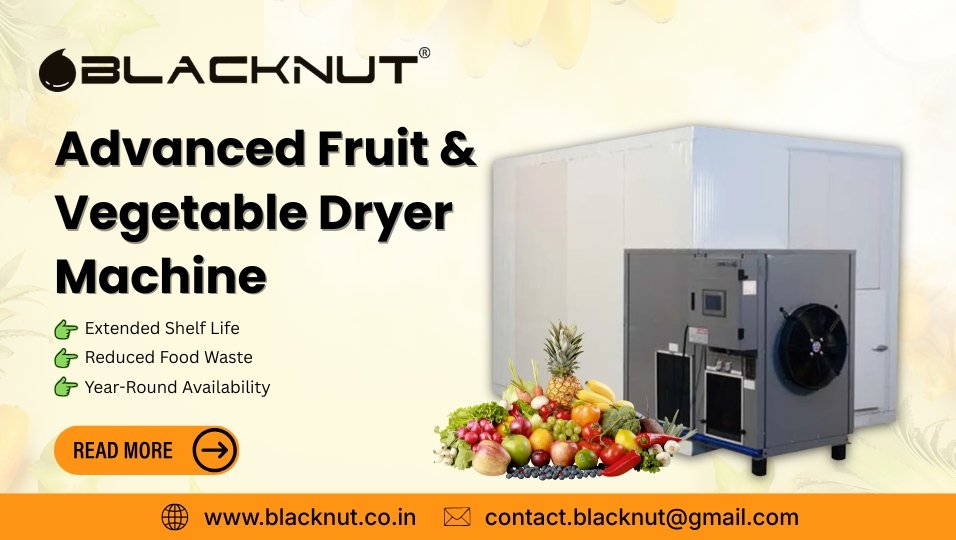
Fruit and Vegetable Dryer Machine: Modern Food Processing Businesses
In today’s competitive food industry, reducing post-harvest losses and increasing product shelf life is no longer optional — it’s essential. A fruit and vegetable dryer machine plays a crucial role in helping farmers, food entrepreneurs, and processing units convert fresh produce into long-lasting, value-added products.
Companies like Blacknut Agrifood Machinery are manufacturing advanced dehydration systems that support commercial-scale fruit and vegetable drying using modern heat pump technology.
If you are planning to start a dehydration business or expand your food processing unit, this guide will help you understand how a fruit dryer machine or vegetable dryer machine can transform your operations.
What is a Fruit and Vegetable Dryer Machine?
A fruit and vegetable dryer machine is a type of food processing equipment used to extract moisture from fresh produce while maintaining regulated airflow and temperature. Eliminating moisture greatly increases shelf life and prevents microbiological growth.
According to product information provided by Blacknut Agrifood Machinery, their heat pump dryer systems are used for drying fruits, vegetables, spices, herbs, and other agricultural products in hygienic and controlled environments. These systems help maintain product quality, color, and flavor during dehydration.
Drying technology is widely used across the global food industry because properly dehydrated products can be stored longer without refrigeration while retaining their essential characteristics.
Why Is Drying Important in the Food Industry?
One of the biggest problems facing agriculture is post-harvest losses. Fresh fruits and vegetables are extremely perishable due to their high moisture content. Dehydration solves several problems at once:
1. Extended Shelf Life
Moisture removal reduces the risk of microbial spoilage. This allows dried products to be stored for months compared to the short lifespan of fresh produce.
2. Reduced Food Waste
Drying surplus produce during peak harvest seasons prevents wastage and allows producers to convert excess crops into profitable products.
3. Year-Round Availability
Seasonal fruits and vegetables can be processed and sold throughout the year in dried form.
4. Value Addition
Dried mango, banana chips, tomato powder, onion flakes, garlic powder, and herbal products often have higher market value than raw produce.
How Does a Fruit Dryer Machine Work?
Modern fruit dryer machine systems use controlled air circulation and temperature management. In heat pump-based dryers (like those manufactured by Blacknut Agrifood Machinery):
Warm air is circulated through trays of sliced produce.
Moisture evaporates gradually
Controlled drying ensures better retention of color and texture.
Energy efficiency is maintained through heat recovery systems.
Heat pump drying is preferred in commercial applications because it allows precise temperature control, which is crucial for preserving product quality.
READ MORE: Business Opportunities with Fruit and Vegetable Dehydration Plant in India
Applications of a Vegetable Dryer Machine
A vegetable dryer machine is widely used for:
- Onion flakes
- Garlic slices
- Tomato powder
- Ginger drying
- Leafy vegetables
- Green peas
- Carrot flakes
These products are used in food processing, ready-to-eat meals, spice industries, and export markets.
Businesses that adopt commercial drying systems can diversify into multiple product categories without relying solely on fresh produce sales.
Why Choose Commercial Drying Machines?
For entrepreneurs entering the food processing sector, investing in a commercial fruit and vegetable dryer machine offers multiple advantages:
Consistency in Quality: Uniform drying ensures better texture and appearance, which is important for premium markets.
Hygienic Processing: Industrial dryers operate in controlled chambers, reducing contamination risks.
Scalability: Commercial units are designed for higher capacities, supporting growing business demands.
Energy Efficiency: When compared to conventional open sun drying techniques, heat pump dryers are renowned for their superior energy management.
Why Blacknut Agrifood Machinery?
When selecting machinery, the manufacturer’s expertise matters.
Blacknut Agrifood Machinery specializes in designing and supplying food processing equipment, including heat pump dryer systems tailored for fruit and vegetable dehydration.
Their systems are used for:
- Fruit dehydration
- Vegetable dehydration
- Spice drying
- Herbal processing
The company focuses on providing technology-driven solutions for food processing entrepreneurs in India and beyond.
Choosing the right manufacturer ensures:
- Technical support
- Installation guidance
- Customization options
- Long-term service reliability
Who Should Invest in a Fruit and Vegetable Dryer Machine?
A fruit dryer machine or vegetable dryer machine is ideal for:
- Food processing startups
- Farmer-Producer Organizations (FPOs)
- Agro-entrepreneurs
- Export-oriented units
- Spice manufacturers
- Snack manufacturers
With rising demand for healthy snacks and dehydrated ingredients, the global market for dried food products continues to grow.
Key Factors to Consider Before Buying
1. Capacity Requirements – Daily Processing Volume
Choose a fruit and vegetable dryer machine based on how many kilograms you plan to process per day. Buying too small a machine can limit growth, while an oversized machine may increase unnecessary investment and operational costs.
2. Energy Consumption – Efficiency of Heating System
Energy cost directly impacts profitability, so select a fruit dryer machine with an energy-efficient heating system. Heat pump technology is often preferred in commercial settings because it optimizes power use and reduces long-term operating costs.
3. Drying Technology – Heat Pump vs Conventional
Heat pump dryers provide better temperature control and uniform drying, while conventional dryers may consume more energy and offer less precision. The right vegetable dryer machine should maintain consistent airflow and controlled conditions for better product quality.
4. Product Selection: Herbs, Spices, Fruits, and Vegetables
If you intend to diversify, be sure the equipment can handle a variety of product types. A versatile fruit and vegetable dryer machine allows you to process fruits, vegetables, spices, and herbs without investing in separate equipment.
5. After-Sales Support – Service Availability
Reliable technical support, spare parts availability, and installation guidance are essential for uninterrupted production. Strong after-sales service ensures long-term performance and better return on investment.
Choosing the Right Solution for Your Business
A fruit and vegetable drying machine is a business opportunity as well as a piece of equipment. It enables food processors to reduce waste, increase profitability, and create shelf-stable products with market demand.
Whether you’re launching a dehydration startup or upgrading your processing line, investing in a reliable fruit dryer machine or vegetable dryer machine can significantly strengthen your business model.
Companies like Blacknut Agrifood Machinery are contributing to modern food processing by offering advanced heat pump drying systems that help entrepreneurs build sustainable and scalable operations.
FAQs
Can I dehydrate fruits and vegetables together?
Yes, you can dehydrate fruits and vegetables together, but it is generally recommended only if they have similar moisture content and drying time. Fruits usually contain higher natural sugars and moisture compared to most vegetables, which means they often require different drying durations and temperatures.
How to dry fruits and veggies?
Drying fruits and vegetables involves a controlled moisture removal process. Here are the basic steps:
Step 1: Washing and Cleaning
Remove dirt and impurities thoroughly to ensure hygiene.
Step 2: Cutting or Slicing
Slice produce into uniform pieces to ensure even drying.
Step 3: Pre-Treatment (if required)
Some vegetables require blanching to preserve color and texture. Certain fruits may need anti-browning treatment.
Step 4: Drying Process
Place the prepared slices in a fruit and vegetable dryer machine where controlled heat and airflow gradually remove moisture.
Step 5: Cooling and Packaging
After drying, cool the product properly before packaging to prevent moisture reabsorption.
In commercial operations, a vegetable dryer machine or a full dehydration system ensures consistent quality, controlled temperature, and better energy efficiency compared to open sun drying.
Is a dehydration plant fully automatic?
Most fruit and vegetable dehydration plants offer higher levels of automation compared to standalone dryer machines. They integrate multiple processing stages, which improves efficiency, consistency, and hygiene in large-scale operations.